
Published 11 Dec 2024
Beyond the Pottery Wheel: A Beginner’s Guide to Ceramic Mold Making
Ceramic mold making opens up endless potential for creative expression. Not only does ceramic mold making enable you to repeat a form over and over again, it also makes individual forms lose their preciousness, which frees you up to experiment more!
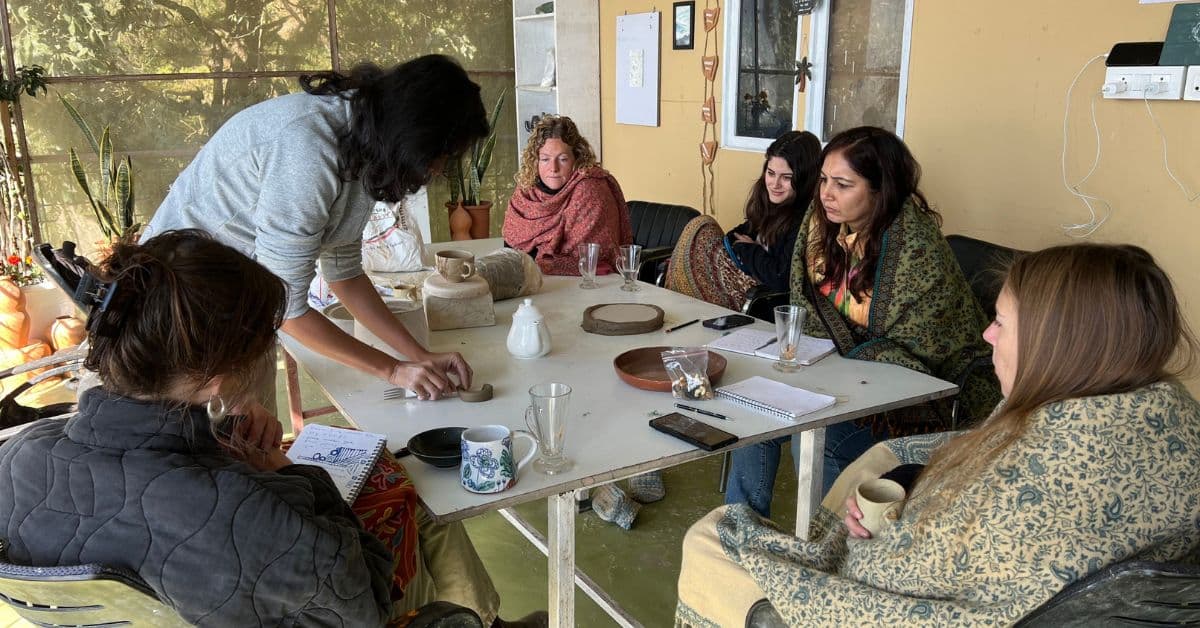
Making your own custom ceramic molds will help you break out of your comfort zone in the studio and grow as an artist.
Types of Molds
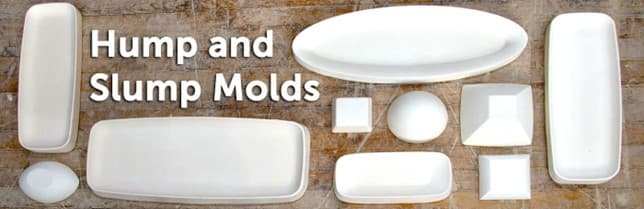
- Bisque Clay Hump or Slump Molds – using slabs for batch production
- Slip casting drop out mold
- Multipart Molds
Making Plaster
Ensure your set up is ready – a share you want to make a mold for, wooden or clay walls to pour plaster into.
Generic rule for good plaster water ration is 1 pint of water to 750 grams of plaster. When doing by eye, measure your water in a container, wear a mask to avoid inhaling plaster dust.
Slowly add plaster in the bowl, making sure you are evenly pouring it in till it forms peaks that don’t settle as quickly. Stop adding the plaster and start mixing using your hand or a mixer.
When it reaches double cream consistency it is ready to pour, ensure it is a smooth blend, free of any lumps.
1. Bisque Clay Hump or Slump Molds
Ideal for shallow bowls, dishes and plate shapes. Slump mold (press mold): A typically shallow frame or mold into which a slab of clay is allowed to fall or settle in order to form a vessel.
Hump mold: A convex form over which clay slabs are draped until stiff enough to hold the shape. Using a wheel make a clay wall of the shape you want a model of, let the clay wall get leather hard and pour plaster in it.
2. Drop Out mold
Simple shapes like bowls, vases, platters can be made using one-art molds. You can create a whole piece in a single cast using slip casting till there are no undercuts that would grip in the mold.
Prepare the model – check for any undercuts. If using a plaster model – soak the plaster base if it is bone dry. Soft soap plaster model, using sponge wipe it off.
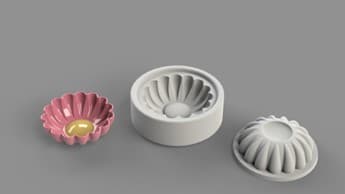
3. Two-Part/Multipart Mold
Good for more complex shapes, with curved or complicated profile. Start by identifying where can the shape be divided, making a feed for slip casting molds.
Find the seam line of the object and make a base set. Seam line – where the mold will split. Set model on horizontal slab of clay.
Refer to Complete Pottery Techniques, DK for more information and step by step pictures.