
Published 18 Sep 2025
Clay as Meditation: The Therapeutic Benefits of Working with Your Hands
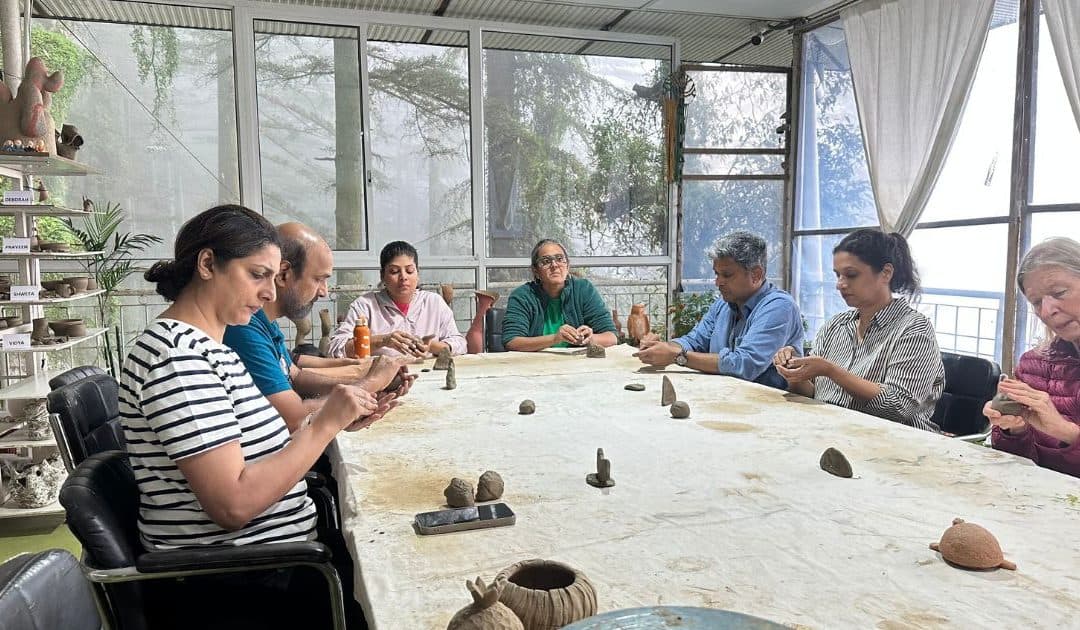
Before the day’s workshops begin, there is a particular stillness in the studio. Hands move slowly through clay, breath begins to follow rhythm, and attention gathers around touch. In that quiet, pottery becomes more than making; it becomes meditation.
Clay, Breath, And Being
Long before meditation apps and modern wellness language, human hands found steadiness in earth and water. Across cultures, clay work has carried ritual, function, memory, and silence. A vessel can hold food or flowers, but it can also hold attention.
At Dharamkot Studio, students often arrive with busy minds, deadlines, digital fatigue, and the pressure to move quickly. Clay changes the pace. It asks them to feel, listen, repeat, adjust, and stay with what is happening now.
Clay gives meditation a tactile form: cool, responsive, grounding, and alive under the hands.
Why Touch Can Feel So Healing
Working with clay engages the senses and the body at the same time. The hands receive texture, weight, moisture, resistance, and temperature. This sensory feedback helps bring attention out of mental noise and back into the present moment.
Pottery also invites both structure and creativity. One part of the mind plans, measures, and adjusts technique; another part responds intuitively to form, gesture, and feeling. When those parts begin working together, many people enter a flow state where time feels softer and self-consciousness drops away.
The repetitive motions of wedging, pinching, coiling, centering, and pulling can also calm the body. Breath slows. Shoulders lower. The nervous system receives a simple message: you are here, and this moment is enough to work with.
The Four Pillars Of Clay Meditation
Clay meditation rests on four simple qualities: presence, patience, imperfection, and non-attachment. Together, they turn pottery from a technique into a practice.
- Presence: clay responds immediately when attention wanders, making it a direct teacher of the present moment.
- Patience: clay cannot be rushed; it dries, firms, fires, and transforms in its own time.
- Imperfection: every thumbprint, asymmetry, and unexpected curve becomes part of the object’s honesty.
- Non-attachment: forms collapse, pieces crack, glazes surprise us, and the practice teaches us to value process as much as outcome.
Simple Clay Meditation Techniques
You do not need advanced pottery skills to begin. Clay meditation can start with a small piece of clay, a quiet surface, and a few minutes of honest attention.
Centering Meditation
- Place your palms on the clay and notice the wobble without trying to fix everything at once.
- Apply steady pressure while breathing slowly.
- As the clay finds balance, use it as a reminder to find your own centre.
Pinch Pot Meditation
- Hold a ball of clay in one hand and press your thumb into the centre.
- Pinch slowly around the form, matching movement with breath.
- With each round, release one thought, worry, or expectation.
Coil Building Meditation
- Roll coils slowly until the clay warms beneath your palms.
- Build layer by layer, noticing how small actions create structure.
- Let the form remind you that steadiness is built one patient movement at a time.
What Clay Can Support
Clay is not a replacement for therapy or medical care, but it can be a meaningful support for stress, anxiety, grief, burnout, and emotional overwhelm. It offers expression without needing perfect words.
For anxiety, a small clay worry stone can focus restless energy into touch. For anger, clay can be squeezed, pressed, and reshaped safely. For grief, a simple bowl can become a vessel for memory. For overwhelm, one breath and one small change to the clay can be enough to begin again.
Clay As Community
Some of the most powerful studio moments happen in shared silence. A group of people working with clay does not always need conversation to feel connected. The rhythm of making, the common challenges of the material, and the respect for each person’s process create their own kind of community.
In retreat settings, participants often share what the clay taught them rather than only what they made. They speak about patience, frustration, surprise, joy, and the small inner shifts that happen when the hands are allowed to lead.
Carrying The Practice Into Daily Life
The wisdom learned through clay does not have to stay in the studio. Centering clay can become a reminder to centre yourself before a difficult conversation. Patient pressure on a rising wall can become a reminder that meaningful change often comes through consistent effort rather than force.
Once you learn to love the thumbprints on a handmade cup, it becomes easier to soften toward imperfection in yourself and others. Once you have seen a beautiful piece crack in the kiln, it becomes easier to hold outcomes with a little more grace.
Beginning Your Own Clay Meditation Practice
Start simply. Keep your phone away, clean your workspace, place a small bowl of water nearby, and hold the clay before shaping it. Notice its temperature, weight, and response to your hands.
A first session might be as small as five minutes of holding clay and breathing, or as long as an hour of pinching, coiling, throwing, and journaling afterward. The point is not to make impressive pottery. The point is to return to touch, breath, attention, and the possibility of transformation.
At Dharamkot Studio, clay meditation is woven into the way we teach. Whether someone joins a short workshop or a longer retreat, the invitation is the same: slow down, let the hands remember, and discover what happens when earth, body, and attention meet.