
Published 28 Apr 2026
What changes when a pottery retreat gives you time to slow down?
A retreat changes the relationship between making and time. Without needing to compress everything into a few hours, people often settle into clay with more patience, more quiet, and less urgency.
Introduction
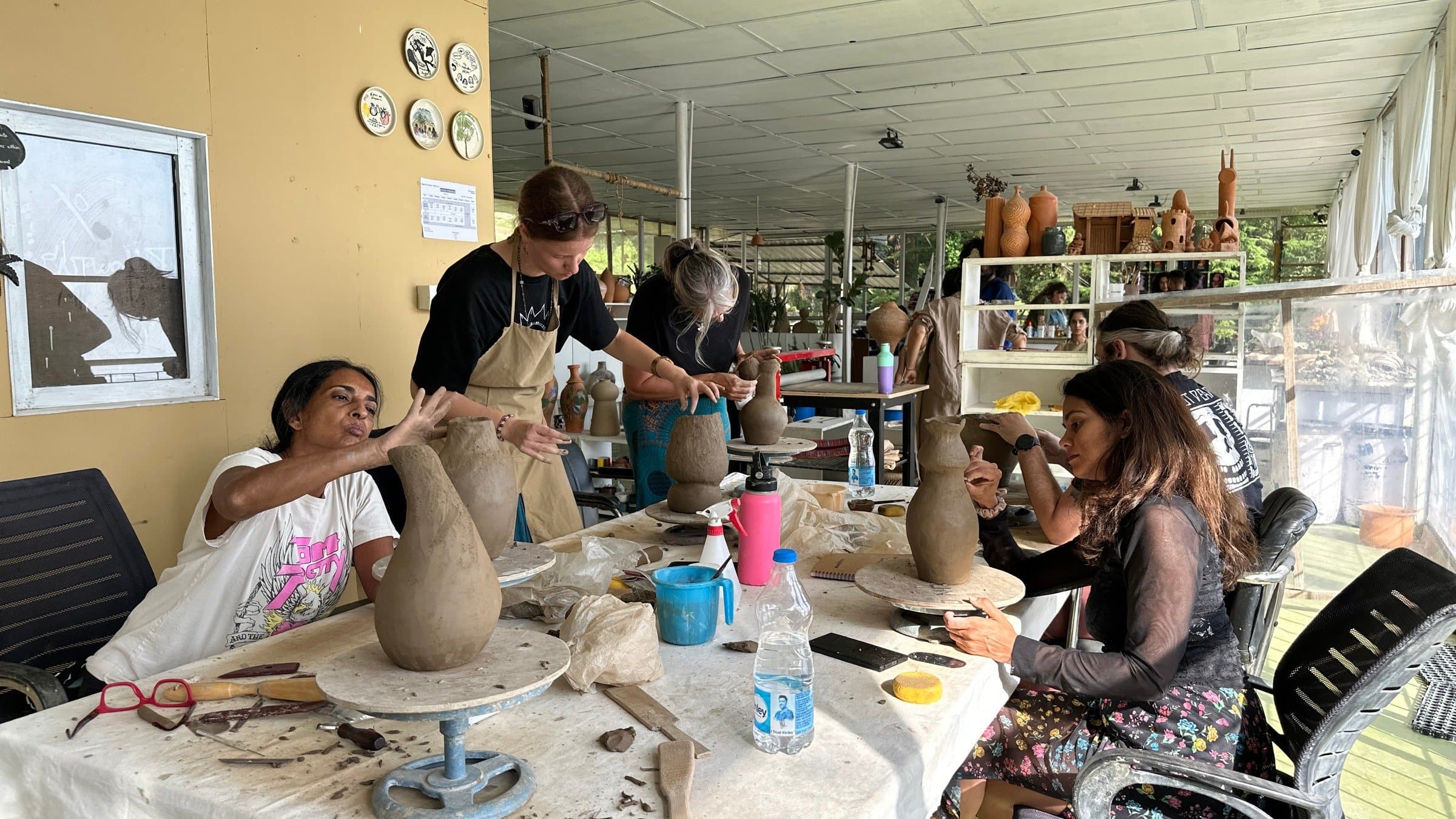
In a retreat format, the studio is not separate from the rest of the day. Meals, rest, conversations, walks, and making all sit close to one another. That changes how people enter the studio and how long they can stay attentive inside it.
Instead of rushing toward a finished object, participants often begin by noticing pace. They work, pause, return, and see things differently a few hours later. Clay becomes less of a task and more of a place to remain with.
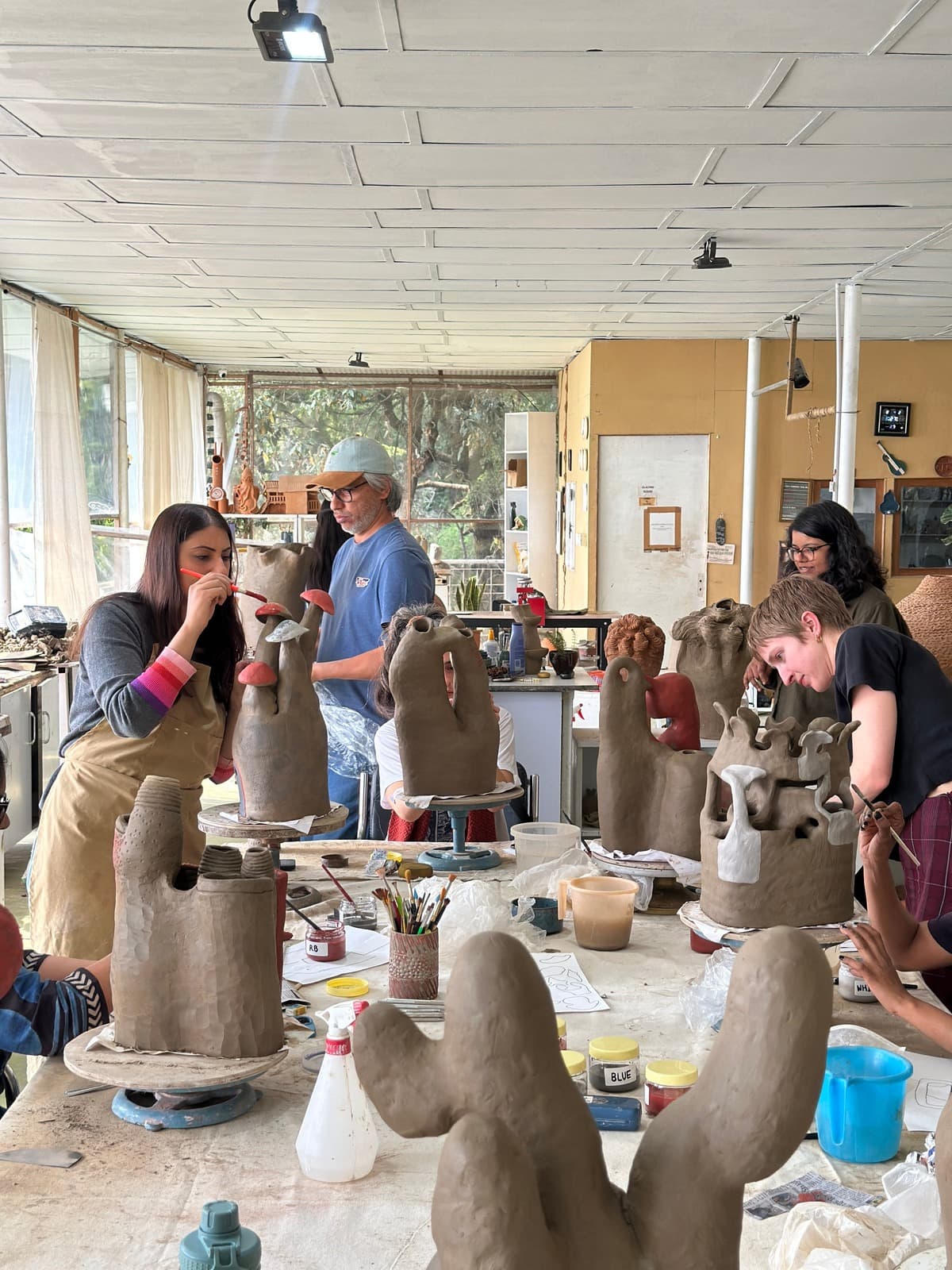
Longer stays let the studio feel lived in, rather than visited only briefly.
What retreat pace makes possible
When the day opens up, people are usually able to stay longer with uncertainty. They can try something, leave it, come back, and see it with fresher attention. That creates a different quality of learning than a shorter format often allows.
The group rhythm also softens. Conversations become less hurried, feedback becomes easier to absorb, and participants often find themselves learning as much from observing others as from direct instruction.
“The retreat format gives people enough time to stop performing productivity and start listening more carefully to material, body, and pace.”
- Studio reflection, Dharamkot Studio
A day that feels more spacious
Retreat days tend to hold a fuller arc. There is guided time, independent time, informal exchange, and enough quiet for people to understand what they are actually noticing.
- Morning sessions often feel more focused and receptive.
- Afternoons create room for experimentation and slower repetition.
- Evenings help people absorb the day instead of immediately moving past it.
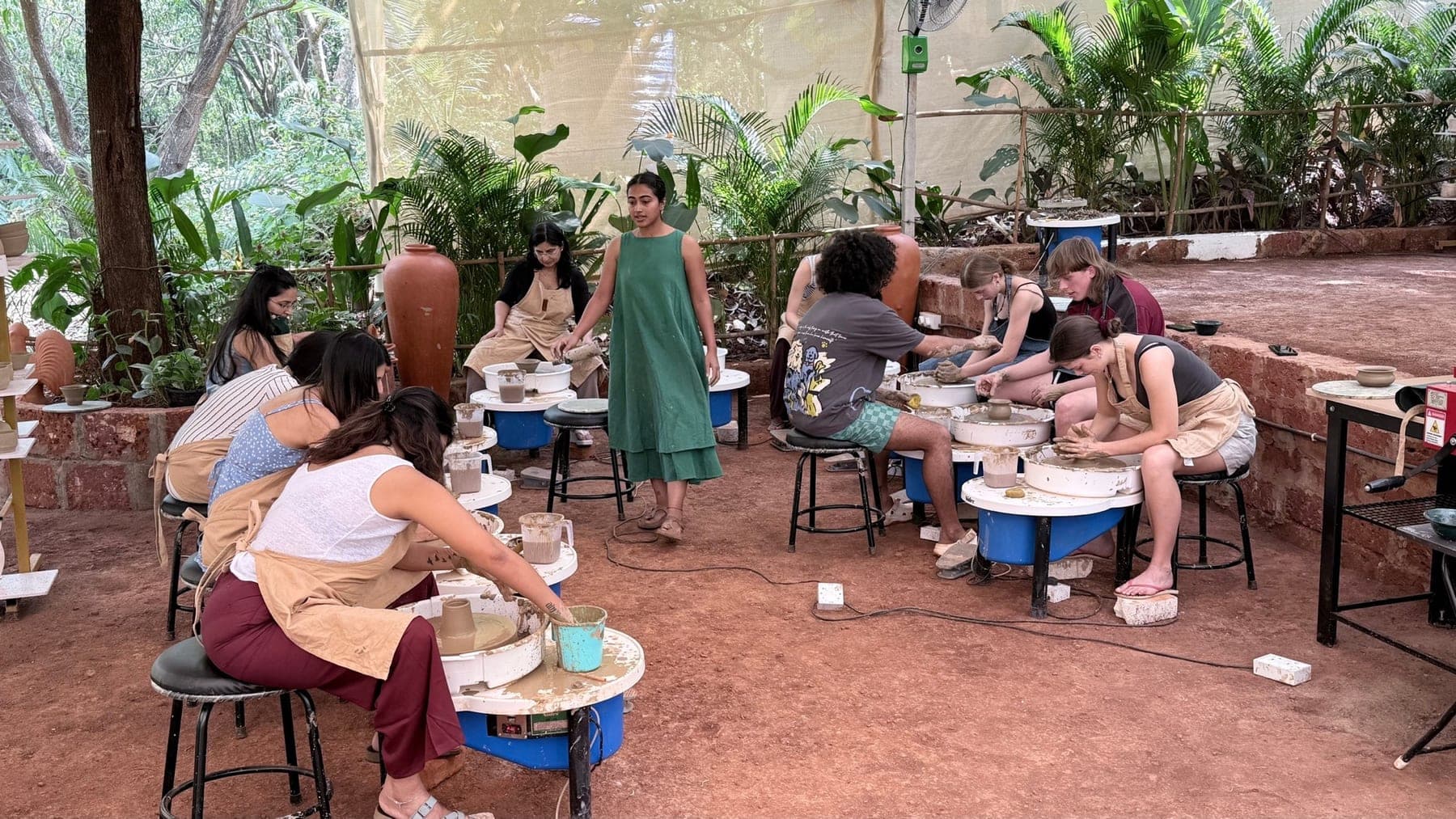
Retreat learning often feels different because the rest of the day supports the making process instead of interrupting it.
Why people remember the rhythm
When participants speak about retreats afterward, they often remember the tempo before they remember a specific object. They remember the quiet, the repetition, the meals, the pauses, and the feeling of having had enough time to arrive.
That is often the real shift. Clay begins to feel different when the day around it becomes more spacious.