
Published 25 Apr 2025
In Conversation with Irina Lapenko – Artist Spotlight
Some artists work with clay. Others listen to it. Irina Lapenko—also known as Rada Kalina—listens deeply.
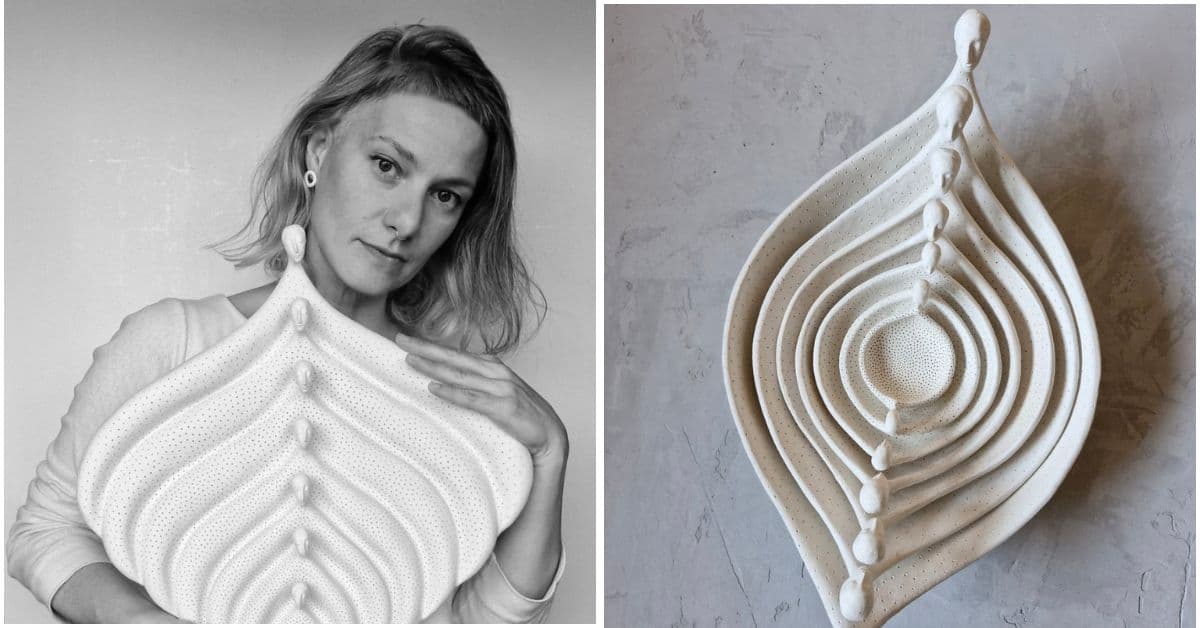
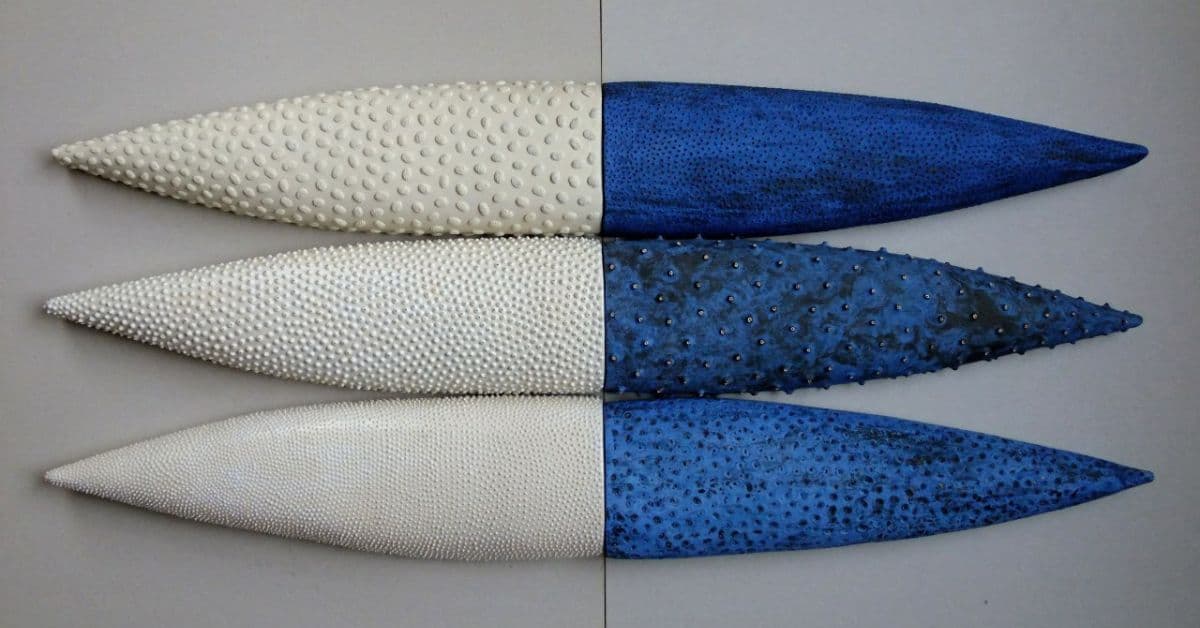
Born in Arkhangelsk in 1980, and now based in Novgorod, Irina’s work feels shaped by coastlines, memory, and the quiet strength of ancestral rhythm. Her ceramic practice is sculptural, story-driven, and steeped in a cool, deep palette—most often blue and white. It’s the kind of work that doesn’t just sit in a room—it speaks to it.
Before clay, there was fabric. Irina’s first language as an artist came through textiles, and that softness, that attention to surface, still runs through her practice. She works primarily with slab-building and hand sculpting, shaping forms that feel both architectural and intimate. You can almost sense the touch that shaped them.
“I try to express my feelings through ceramics in the form of sculptural objects telling different stories. Nautical motifs dominate my work.”
- Irina Lapenko
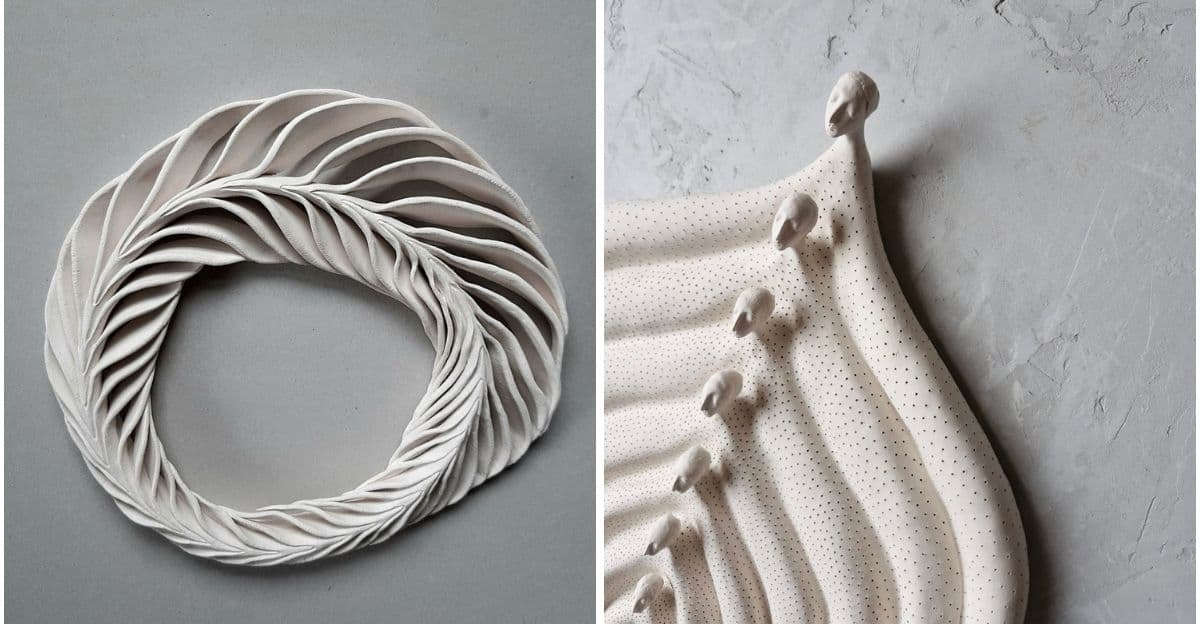
Her pieces—like Cups of Memories, The Littoral, or The Way—carry both visual silence and symbolic weight. They are forms shaped by motion, tension, and tide. You feel the presence of the North, of waves and shorelines, of soundwaves made solid.
Irina describes herself as a symbolist artist. Her practice often explores ancestral memory, the invisible systems that shape us, and the question of how inner experiences are embodied through clay.
“I develop rhythmic structures in clay and make architectural ceramics for the interior. The general theme of my works is the manifestation of the whole in natural rhythm or in the sound-wave effect.”
- Irina Lapenko
A Conversation with Irina
How did your journey in ceramics begin? I first encountered ceramics through traditional potters in northern Russia—those early experiences were grounded in classical ceramic forms. For a while, I worked almost entirely on the potter’s wheel, but eventually I felt the need for more freedom in shaping. That’s when I started hand-building.
While teaching children, I kept learning myself. My background in costume design made the slab technique feel familiar—it was a natural shift. That’s how I began creating wall-mounted pieces. I’ve always been more drawn to artistic expression than to utility. Ceramics became a way for me to speak—quietly, symbolically, but with honesty.
How do you choose what pieces to create? Often, I see images in my mind—glimpses of something that wants to be made. I work with themes that move me personally. Meaning is very important in my work; it’s like a conversation that slowly takes form in the material.
I consider myself a symbolist artist. I strive for simplicity and clarity—forms that say more by showing less. And the process is never predictable. I never fully know how something will turn out, and that mystery… it’s part of the joy.
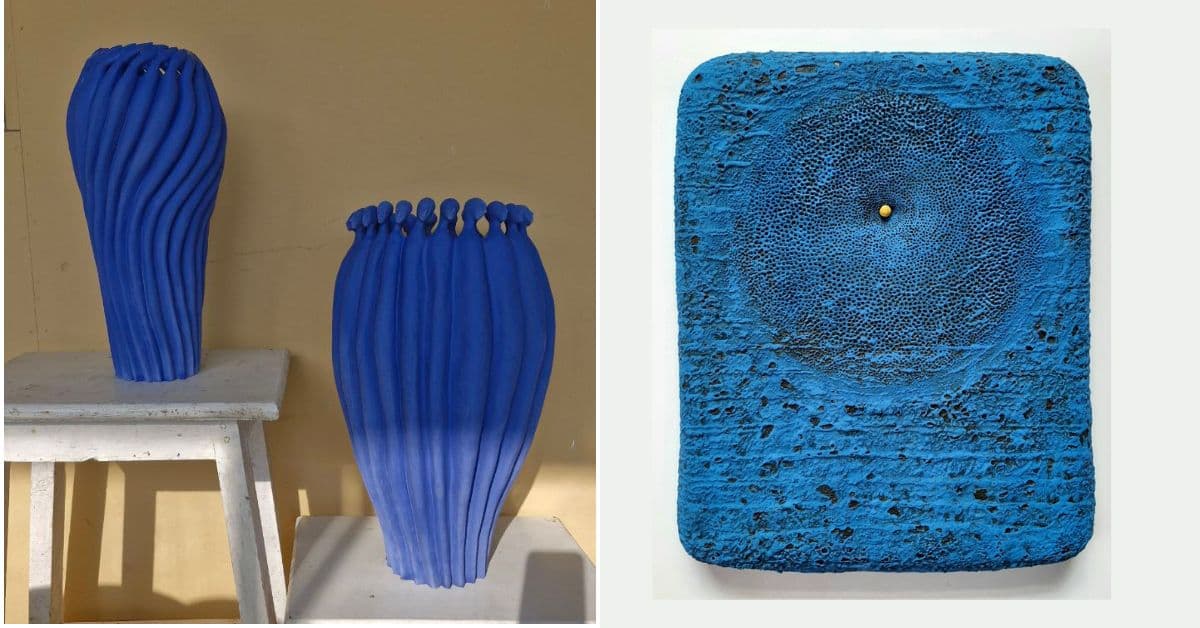
What materials do you enjoy working with? I love grog clay—it holds its shape well and behaves predictably, which I appreciate. I enjoy its texture, the way it feels under my hands.
Often, I’ll contrast it with white clay or porcelain. There’s something beautiful about that dialogue—the coarse strength of grog next to the softness and lightness of porcelain. It’s like bringing together confidence and delicacy in the same breath.
What do you love about making ceramic sculptures? The intrigue—always. And that moment of quiet satisfaction when everything aligns: the proportions, the rhythm, the emotion. When it all just clicks, and the piece begins to sing in its own language.
How does Russian culture influence your art? Roots and tradition matter deeply to me. I have great respect for my ancestors, and in some of my series I’ve worked directly with traditional Russian forms—reinterpreting them in contemporary ways.
You can view more of Irina’s work on her ReadyMag portfolio or follow her on Instagram. And if you’re quiet enough, one of her forms might just whisper back.